

Bedsheet Manufacturer and Supplier
- May 16, 2026
Bedsheet Manufacturer and Supplier
Most people don't think twice about bedsheets until something goes wrong. The colour fades after three washes. The fabric pills up. The stitching gives way at the corners. And then suddenly you are replacing a bulk order you placed six months ago, which is frustrating, expensive, and completely avoidable.
Whether you are running a hotel, managing a hospital linen department, or sourcing wholesale for retail, the decision of who you buy your bedsheets from matters a lot more than most buyers realise. We have been in this space long enough at Jindal Ecotex to know exactly where things go wrong and, more importantly, how to get it right.
Thread Count Is Not the Whole Story?
Let's start with the biggest misconception in the bedding world. Thread count. Everyone talks about it. (400 thread count, 600 thread count, 1000 thread count) as if the higher the number, the better the sheet.
Thread count tells you how many threads are woven per square inch, but it says nothing about the quality of those threads. A sheet made from short-staple, low-grade cotton can have a high thread count and still feel rough, wear out quickly, and lose its colour fast. Meanwhile, a well-made sheet using long-staple cotton at 200–300 thread count will outlast it by years.
When you are sourcing in bulk whether you are a hotel bedsheet supplierlooking for consistency or a retailer stocking printed bedsheets for the consumer market, this distinction matters enormously. Because your customers will feel it. And they will come back to you about it.
Yarn quality - Long-staple cotton (like Egyptian or Supima) produces a smoother, stronger, more durable thread. This is the foundation of a premium bedsheet.
Weave type - Percale weave gives you that crisp, cool feel. Sateen weave is softer and slightly lustrous. Both are good; the right one depends on your end use.
GSM (grams per square metre) - Particularly important for flat sheets and duvet covers. A higher GSM generally means a heavier, more durable fabric but again, only if the base material is good.
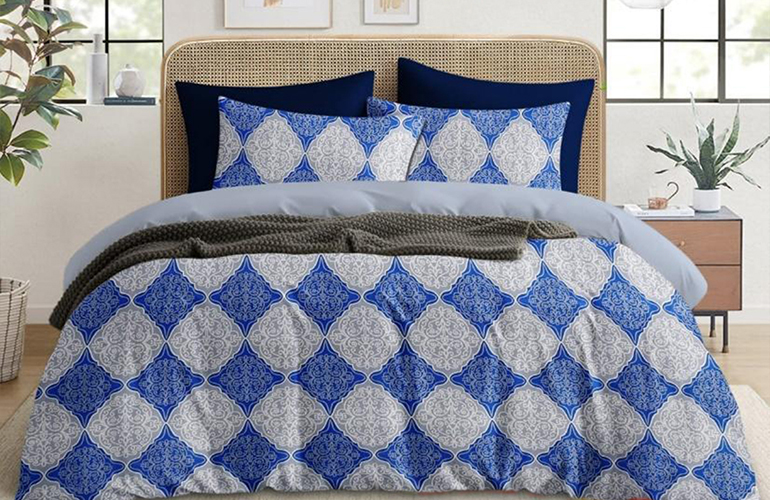
Colourfastness - Especially critical for printed bedsheets. The dye quality and fixing process determine whether a design stays vibrant after repeated industrial washing or turns patchy and dull within months.
What to Actually Look for in a Bedsheet Manufacturer
When you are evaluating a bedsheet manufacturer in India, here's a simple checklist worth keeping:
Do they have in-house manufacturing or are they just trading? In-house means more control over quality and lead times.
Can they show you consistency across bulk orders, not just samples? Ask for references from existing clients.
What's their minimum order quantity, and is it practical for your business?
Do they offer customisation sizes, prints, packaging or is it take-it-or-leave-it?
How do they handle defects or shortfalls? Their answer to this question tells you a lot about how they operate.

Why This Matters More Than Ever
The bedding and linen industry in India is growing fast. There are more suppliers than ever, which sounds like a good thing but it also means more noise, more cutting of corners, and more businesses getting burned by choosing on price alone.
At Jindal Ecotex, we work with hotels retailers, and export clients who need one thing above everything else: reliability. Consistent quality, on-time delivery, and a manufacturer who stands behind what they produce. If you are looking for a bedsheet manufacturer and supplier, you can build a long-term sourcing relationship with not just a one-time transaction.

Drop us a line